
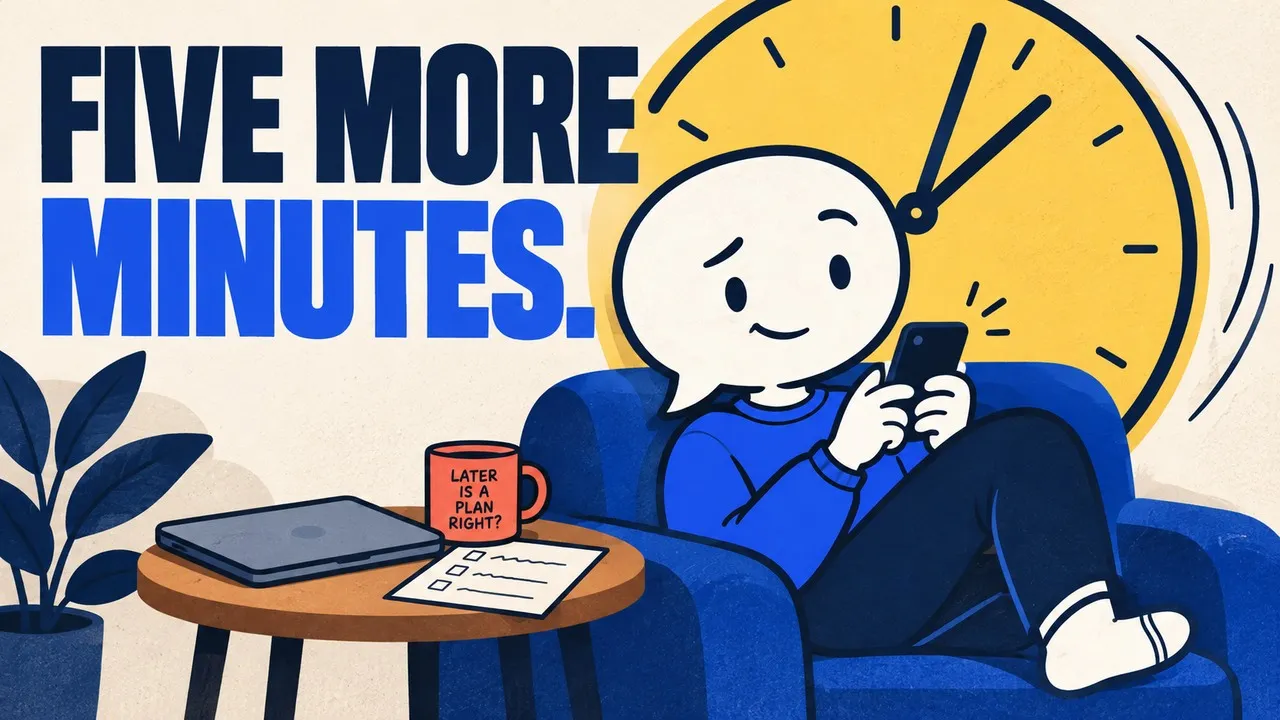
The moment before the task
An unopened document can feel heavier than a whole afternoon of work. Before anything has happened, you are already thinking about the effort, the uncertainty and all the ways the finished thing might fall short.




There is no single explanation for putting things off. Sometimes the task is unclear. Sometimes it is unpleasant. Sometimes you are tired, distracted or asking more of yourself than you can manage right now.
Wait, but isn’t that just being lazy?
Not really. Laziness means not wanting to do something at all. Procrastination is usually wanting to do it, and still avoiding the uncomfortable feeling of starting. That difference matters, because the fix is different too.
Make the first step visible
Instead of “write the essay”, try “open the document and write one rough sentence”. Instead of “sort out the house”, try “put the cups in the kitchen”. You are giving yourself an action you can actually begin.
 Write the essay
Big, vague, and easy to avoid.
 Write one rough sentence
Small, clear, and ready to go.
The NHS suggests a “just five minutes” approach to a task you have been avoiding. A short, manageable start can feel less daunting, and you can decide what to do next once those minutes are over.